
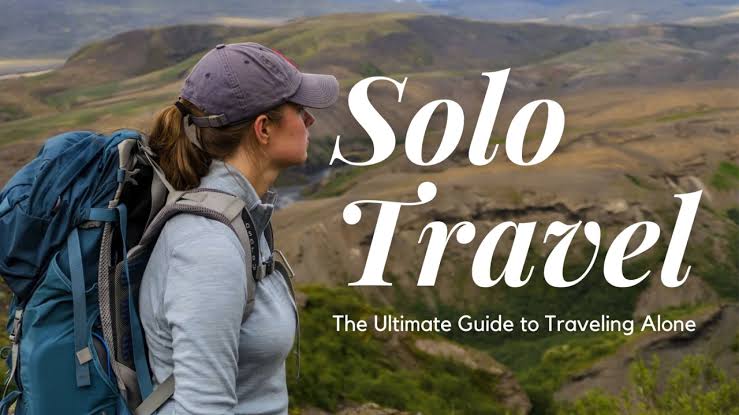

Why Solo Travel Is Worth the Initial Anxiety
The prospect of travelling alone produces anxiety in most people who have not done it, and genuine excitement in most people who have. The specific anxieties — being lonely, being unsafe, eating alone, not having anyone to share experiences with — are each real but consistently overestimated in severity by first-time solo travellers and consistently outweighed by the benefits they discover in practice. The freedom to make every decision according to your own preferences, the extraordinary openness that solo travellers attract from locals and other travellers, the deep sense of self-reliance that navigating unfamiliar situations alone builds, and the quality of attention that being alone in a new place produces are benefits that shared travel rarely delivers to the same degree.
The most commonly reported revelation among first-time solo travellers is that they were significantly less lonely than they expected to be, and often more socially engaged than they typically are at home. The solo traveller is more approachable, more likely to accept invitations, and more likely to initiate conversations than the traveller surrounded by the social buffer of familiar companions. The paradox that travelling alone often produces more genuine human connection than travelling in a group is well-attested by experienced solo travellers across decades of accounts.
Choosing the Right First Solo Destination
The first solo trip benefits from a destination that combines genuine interest with practical accessibility — a place you genuinely want to be rather than a training ground, but one that does not present significant logistical, language, or safety challenges that compound the learning curve of solo travel itself. Countries with strong tourist infrastructure, widely spoken English or your language, reliable public transport, and a culture of friendliness toward travellers provide the supportive conditions in which the first solo experience is most likely to be positive.
Destinations that consistently rank well for first solo travellers include Japan (exceptionally safe, highly organised, and surprisingly easy to navigate despite the language difference), Portugal (welcoming to visitors, English widely spoken, excellent transport, affordable), New Zealand (English-speaking, spectacularly beautiful, extremely safe, and with a strong independent travel infrastructure), and any of the major European capitals that are well connected by budget carriers and well documented by independent travellers. The specific destination matters less than the match between its characteristics and your current level of travel experience and comfort with ambiguity.
Practical Safety for Solo Travellers
Solo travel safety is largely a matter of awareness, preparation, and common sense rather than paranoia or dramatic precaution. The most important safety practice is sharing your itinerary — where you are staying, what you are planning, and a rough schedule — with someone at home who knows to raise an alert if they do not hear from you at expected intervals. This is simple, costs nothing, and provides a safety net for the very rare situations where you might need someone at home to initiate a response on your behalf.
Research on crime patterns in your specific destination provides more actionable guidance than generic safety advice. The neighbourhoods to avoid, the scams that target tourists in that location, the transport options that are safer than others, and the local emergency numbers all take 30 minutes to research and produce specific, locally relevant guidance. Women travelling solo face additional considerations that are specific to their destination — the cultural norms, the specific behaviours that attract unwanted attention, and the specific precautions that experienced female travellers in each destination recommend are best researched through the accounts of women who have recently travelled there rather than generic advice.
Accommodation Choices That Enhance the Solo Experience
Accommodation selection significantly shapes the solo travel experience. Hostels with active common areas create natural social environments where solo travellers meet other solo travellers and groups with some regularity — the hostel common room at 7pm on a weekday is often a genuinely social environment that requires no effort to enter. Boutique guesthouses and bed and breakfasts often provide the host interaction that adds warmth and local knowledge to the stay. The fully private hotel room that insulates the solo traveller from any interaction is sometimes exactly what is needed and sometimes the choice that produces the loneliness that solo travel is often assumed to involve.
Many experienced solo travellers use a hybrid accommodation strategy: hostels or social guesthouses when they want human connection and a sense of community, and private accommodation when they need quiet, rest, or privacy after an intense social period. This approach treats the social availability of accommodation as a feature to deploy intentionally rather than as a fixed attribute of all accommodation. Booking a mixed dorm in a highly-rated social hostel for the first night in a new city is often the fastest way to get oriented, get local recommendations, and meet people to potentially explore with.
Embracing the Solo Travel Mindset
The single most important practical skill for solo travel is comfort with eating alone — which most people discover is far less awkward in practice than it is in anticipation, particularly when armed with a book, a podcast, or simply the willingness to observe the environment. Bringing a book or a journal to meals serves the double purpose of providing a comfortable prop and attracting the interest of other readers and writers, which more than occasionally produces conversation. Sitting at the bar of a restaurant rather than at a table is a specific strategy that many experienced solo travellers recommend for exactly this reason: it creates the conversational proximity with staff and nearby diners that a table does not.
The mindset that most allows solo travel to deliver its distinctive benefits is openness to change — to plans that shift because something more interesting appeared, to conversations that extend into an afternoon, to invitations from people you met this morning, and to the discoveries that only arrive when you are not committed to being somewhere specific by a certain time. The solo traveller who has built a rigid itinerary and treats deviation from it as a failure is using solo travel’s greatest asset — total personal freedom — to recreate the constraints of group travel without the benefits of the group. Holding plans loosely is not a consequence of poor planning; it is the planning philosophy that makes solo travel most worth doing.