

What a Capsule Wardrobe Actually Is
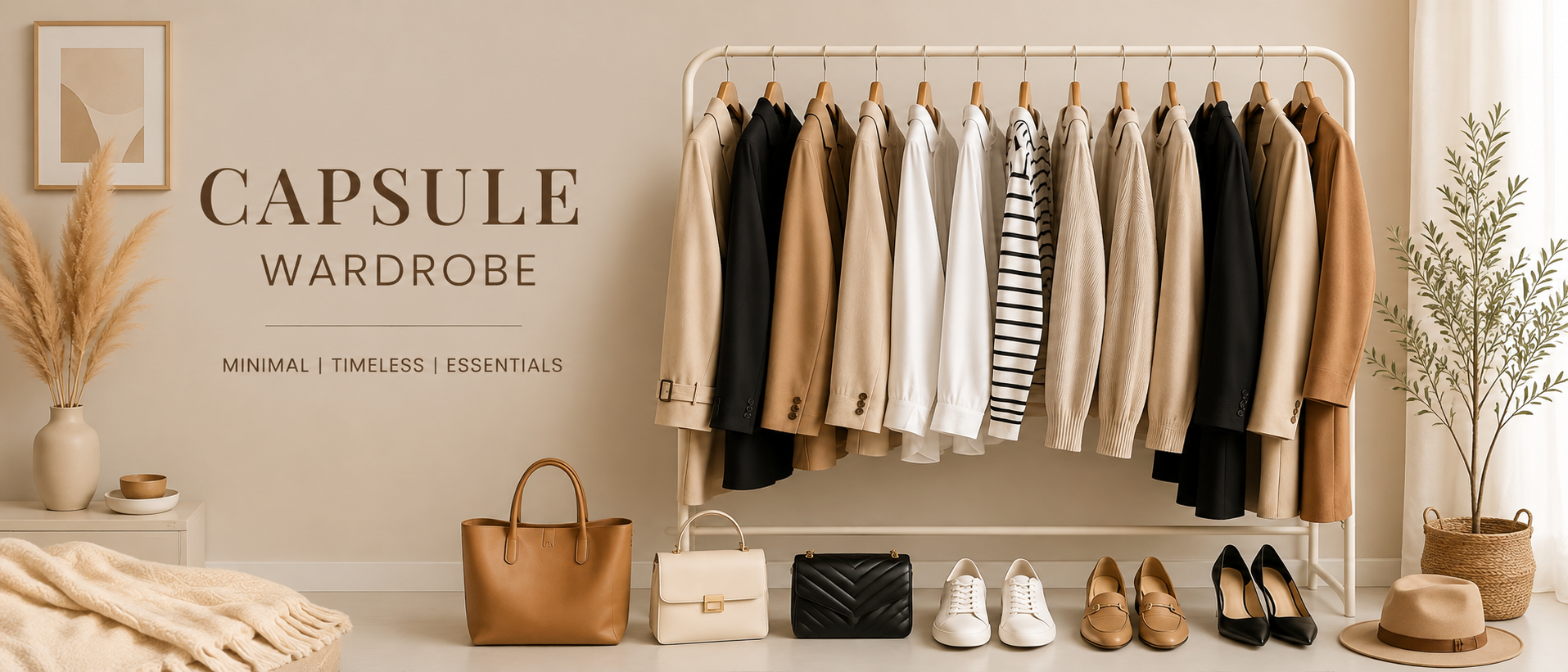
A capsule wardrobe is a small, curated collection of clothes where every item fits well, reflects your actual lifestyle, and coordinates readily with the other pieces you own. The concept was popularised in the 1970s but has gained renewed attention as a counterpoint to fast fashion’s relentless churn of trend-driven pieces that feel necessary in the store and irrelevant six months later. The goal is not to own the fewest possible items — it is to own enough of the right items that getting dressed is effortless rather than a daily negotiation with a closet full of things that don’t quite work.
The size of a capsule wardrobe varies based on lifestyle, climate, and the variety of contexts — work, social, exercise, formal — that you dress for. A wardrobe of 30 to 40 pieces including shoes and outerwear is a common starting point, though the number matters much less than the quality of the curation. What matters is that every piece earns its place by fitting well, suiting the occasions you dress for, and working with at least three other things you own. Items that fail any of these tests are candidates for removal regardless of how much they cost.
Auditing Your Existing Wardrobe
The starting point for building a capsule wardrobe is an honest assessment of what you already own. This means removing everything from your closet and drawers, trying each piece on, and making three piles: keep, donate or sell, and unsure. The keep pile should contain only items that currently fit, that you have worn in the past year, and that you genuinely feel good wearing. Items that are waiting for a diet to finish, items that you keep for sentimental reasons but never wear, and items that were mistakes you have not admitted to yourself all belong in the other piles.
The unsure pile deserves a return visit after you have assessed the keep pile. Often, the keep pile reveals that you already own a sufficient version of what the unsure items were supposed to provide — three similar cardigans in the keep pile makes the fourth in the unsure pile easy to release. Patterns also emerge during the audit: too many of one category, a complete absence of another, colours that don’t coordinate with each other, and quality problems that the abundance of choice usually conceals. The audit creates the clarity that intentional shopping requires.
Identifying the Foundations Your Wardrobe Needs
Capsule wardrobe foundations are the versatile, high-wear items that form the backbone of most outfits. They are typically neutral in colour — navy, grey, white, black, cream, camel — which allows them to work with the more distinctive pieces that add personality to an outfit. Common foundations include a well-fitting pair of dark jeans, a white or light blue button-down shirt, a quality crewneck or V-neck sweater, a blazer in a versatile neutral, and a pair of well-maintained leather or leather-look shoes that work across multiple contexts.
The specific foundations that make sense for your capsule depend on your lifestyle more than on any universal list. Someone who works from home and exercises regularly needs different foundations than someone who wears formal business attire five days a week. Mapping the contexts you actually dress for — home, casual, work, social, exercise, formal — and identifying the specific items that appear in the highest proportion of scenarios in each context produces a personalised foundation list that a generic template cannot.
Buying Better: Quality Over Quantity
The economic case for quality over quantity in clothing is more compelling than it initially appears. A $200 pair of trousers that fits perfectly and lasts five years with proper care costs $40 per year. A $40 pair that fits acceptably and degrades visibly within 18 months costs roughly $27 per year — not dramatically less, and with the ongoing cost of replacement purchases rather than the single upfront investment. When quality pieces are factored into cost-per-wear calculations, they almost always compare favourably to the fast fashion alternative over any meaningful time horizon.
The most important quality signals in clothing are construction and fabric rather than brand name. Natural fibres — wool, cotton, linen, silk — generally age better than synthetics, breathe more comfortably, and maintain their appearance more durably with appropriate care. Construction signals include flat, even seams without puckering, patterns that match at the seams on better-made pieces, buttons that are securely attached, and a weight and drape that feel substantial rather than cheap in the hand. Learning to identify these qualities in a physical store or through detailed product descriptions online reduces the proportion of purchasing mistakes over time.
Maintaining and Evolving Your Capsule
A capsule wardrobe is a living system rather than a fixed destination. Seasonal reviews — similar to the initial audit but less extensive — identify items that have worn out and need replacing, gaps that have emerged as your lifestyle has changed, and pieces that you thought you would wear more often than you have. This regular maintenance prevents the slow drift back toward a cluttered closet full of items that were acquired without sufficient consideration of how they fit the existing collection.
Adding new pieces intentionally rather than reactively is the discipline that keeps the capsule from expanding back into excess. The most useful question before any clothing purchase is whether you can immediately identify at least three outfits that the new piece enables with things you already own. If the answer requires mental stretching, the piece may be an impulse that looks better in the store than in the context of your actual wardrobe. Giving yourself a 48-hour waiting period before buying anything non-essential is a simple friction device that filters out a surprising proportion of purchases that would not have contributed meaningfully to the capsule.