
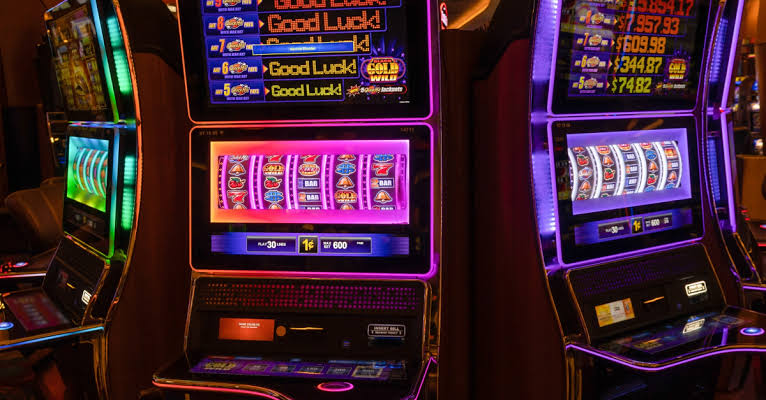

How Slot Machines Actually Work
Modern slot machines are governed by random number generators — computer algorithms that produce thousands of random outcomes per second continuously, whether the machine is being played or not. When you press the spin button, the RNG freezes on a value that determines the outcome instantaneously. The spinning reels on the screen are purely visual — they display the outcome the RNG has already selected rather than determining it. Understanding this eliminates an enormous amount of slot machine mythology, including the belief that a machine is due for a payout after a long losing streak or that there are specific times of day when machines pay better.
Every spin is statistically independent of every other spin. A slot machine that has not paid a jackpot in six months is no more or less likely to pay one on the next spin than a machine that paid a jackpot yesterday. The RNG does not remember previous outcomes and does not adjust future outcomes to balance the results over any period shorter than an effectively infinite number of spins. This is the mathematical foundation that makes slot machines profitable for casinos and unpredictable for players — the combination of genuine randomness and a built-in house edge.
Return to Player: What the Percentage Means for You
Return to Player (RTP) is the percentage of all wagered money that a slot machine is programmed to return to players over its lifetime. A machine with an RTP of 95 percent returns $95 for every $100 wagered on average, keeping $5 as the house edge. In regulated markets, RTPs are typically disclosed or available on request, and most reputable online casinos publish RTPs for all their slots. Land-based casino slots tend to have RTPs ranging from 85 to 95 percent, while online slots often run higher, sometimes above 97 percent, due to lower operating costs.
The critical caveat is that RTP applies over millions of spins, not over your individual session. In any given session, you might win five times your stake or lose your entire budget and the machine’s statistical payout would be consistent with its programmed RTP — because variance at the individual session level is enormous. The RTP tells you the direction of the math over time, not the likely outcome of tonight’s play. The only reliable statement about RTP is that the lower it is, the faster your money will trend toward zero over repeated play.
Volatility: The Factor That Shapes Your Session
Volatility — also called variance — is arguably more important to your session experience than RTP, yet it receives far less attention. A high-volatility slot pays out large prizes rarely, meaning you can experience many losing spins followed by a single significant win. A low-volatility slot pays out smaller prizes more frequently, producing a more gradual, smoother session with fewer dramatic swings. Two machines can have identical RTPs but completely different volatility profiles, producing entirely different playing experiences.
Choosing volatility that matches your bankroll and your session goals is the closest thing to a strategic decision available in slot play. If you have a limited budget and want to play for several hours, low-volatility slots that maintain your bankroll through frequent small pays are the appropriate choice. If you are specifically targeting a large jackpot and are comfortable with the risk of losing your entire session bankroll in pursuit of it, high-volatility slots offer the profile that matches that goal. Neither choice changes the mathematical outcome over time, but each significantly affects how your session feels.
Jackpots, Bonuses, and What They Actually Cost
Progressive jackpot slots fund their jackpots by taking a portion of every bet made on every machine in the network. This means the RTP of a progressive slot is partially determined by where the jackpot happens to be sitting at any given moment — a jackpot that has grown to five times its typical starting value represents a much better expected value than the same machine at its minimum jackpot level. At very high jackpot levels, some progressives technically have positive expected value for a single spin, though the probability of hitting the jackpot is so low that this is academic for most players.
Bonus rounds and free spin features are incorporated into the RTP figure, not added on top of it. When a slot advertises an exciting free spins bonus, that feature is funded by reducing the base game’s pay frequency. The bonus round itself may feel like found money because you are not pressing spin or spending credits during it, but its mathematical contribution to the overall RTP has already been accounted for in the machine’s design. Features are entertainment additions, not financial advantages.
Practical Tips for Slot Players Who Want to Play Smarter
Selecting slots with published RTPs above 95 percent — or 96 percent when available — is the most straightforward way to reduce the mathematical rate at which your bankroll depletes. In online casinos, this information is readily accessible. In land-based casinos, machines near the entrance and in high-traffic areas are often set to lower RTPs than machines in less prominent locations, though this practice varies and is difficult to verify without direct information from the casino.
Setting hard session limits by money rather than by time produces more consistent bankroll protection than time-based limits because the pace of play varies significantly between machines. Deciding before you sit down that you will stop when you have lost $100 or won $200 — and actually stopping at those points — is a discipline that prevents the gradual erosion that characterises the no-limit session. Finally, playing maximum paylines on multi-line machines is typically advisable because some bonus features and jackpot eligibility require maximum line coverage, and a win on an inactive payline is a particularly frustrating outcome to experience.